
|
Each week until Tour Time, Prairie Sage will be profiling one of the sites on our 2017 tours list. For more information on our complete tours listing, and to register, check out the 2017 Calgary Permaculture Tour page! 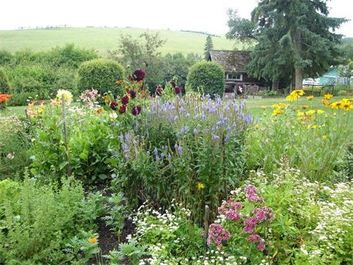 Patterson Springs Farm has been a mainstay of our tour since we began in the summer of 2012 and has always been the final stop on the tour offering a full multiple-course dinner as a finishing touch to the day. This year is no exception as they will be the final stop for 2 out of our 4 tour days this summer (July 30th and August 13)!
The name Patterson Springs Farm is inspired by Frank Patterson, the man who homesteaded this land back in 1902. There is a wonderful freshwater spring on the land which has provided the best drinking water you could imagine, for all these years, to the six generations of Pattersons who have called this farm home. This 80 acre farm in the foothills of southern Alberta has a passion for history and the environment that they would like to share. Here they offer workshops in Permaculture and Pioneer Skills such as growing & preserving your own organic food. They even boast a monthly home delivery service, offering fresh produce, home baking and farm fresh eggs from happy chickens. Patterson Springs also has a large organic vegetable garden, rabbits, bee hives, walking trails and much more! Please check out this years Tours Page to find out more about Patterson Springs as well as the other sites we will visit this tour season! Next week's profile: Senses of the Soul
0 Comments
Each week until Tour Time, Prairie Sage will be profiling one of the sites on our 2017 tours list. For more information on our complete tours listing, and to register, check out the 2017 Calgary Permaculture Tour page! 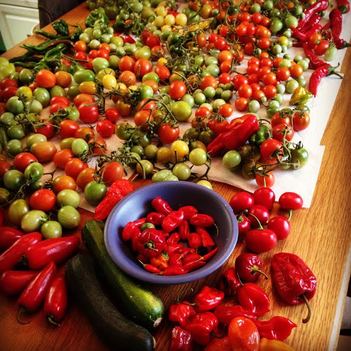 The Leaf Ninjas is back on our tour list this year the give us a guided walk-through of a very special site--one of the residences of The Ninjas themselves! Joining us for the August 12 tour date only, Dave and the gang welcome us right into one of their homes to show off their holistic approach to landscaping and food supply:
"We focus on a wholistic approach to the growing, supplying and installation of plants species and designs around ecological restoration, rainwater harvesting, edible landscaping and urban farming. It's our pleasure to work with developers, landscape architects, permaculture contractors, schools and municipalities. With our native and edible plant nursery 25 minutes East of Calgary, we’re able to grow the highest quality of point-sourced plants for public parks, restoration, erosion control, food production and private residences. Join us at one of our personal residences to explore our multiyear install including food forestry, annual vegetable production and rain water harvesting. Designed for beauty, high intensity production, pollination and function. Looking forward to having the Permaculture Tour once again come to one of our sites." You can even order some very unique and hard to find edible plants from them online! For more information, follow this link: http://www.leafninjas.ca/edible-plants-nursery/ Next week's profile: Patterson Springs Farm Each week until Tour Time, Prairie Sage will be profiling one of the sites on our 2017 tours list. For more information on our complete tours listing, and to register, check out the 2017 Calgary Permaculture Tour page! 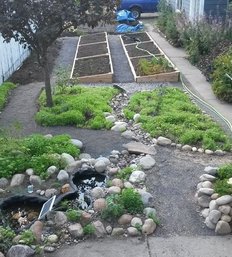 For the second year in a row, reGenerate Design will be joining our list of awesome tour sites. This year Adrian, Lindsay and Luke will be showing off 2 of their works of art on two separate tour dates. In addition to this, they are the designers for the Senses of the Soul landscape--a new addition to the tours this year (and also where we are scheduled to enjoy dinner for 2 out of the 4 tour dates). This year reGenerate will be taking us to Ramsay (July 29th) and to Mongomery (August 13). Each of these sites is profiled briefly below: Ramsay This backyard is an example of permaculture principles in action! The backbone of this project is the integrated rainwater harvesting system that exemplifies the principle of catching and storing energy by putting rainwater to use in five different ways before it leaves the property. This project efficiently and effectively brings together many important uses in a compact space, allowing the homeowner to obtain a variety of yields from perennial food forest areas, a water feature tire pond, social space with a fire pit, and nearly 200 square feet of raised annual vegetable beds that are equipped with custom-designed season-extending cold frames. 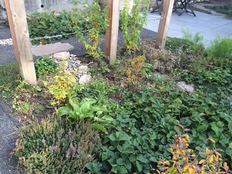 Montgomery
In this full-property project, the challenge was the solution. Working with a triangular property shape, a unique house orientation that captures passive solar energy, and a steep slope in the rear and side yard areas; all of these challenges resulted in a beautiful and functional design that takes advantage of the site characteristics. Rainwater flows from the downspouts through dry creek beds to cascading mulch basins that weave through the yard and form interesting pockets of food forests intertwined with flagstone and crushed rundle pathways. A trellis for growing hops extends along the main pathway that leads to the patio area and eventually to the secret corner reading nook. All of the elements work together to form a cohesive space that can be enjoyed by the homeowners and their friends and family. The third of reGenerate Design's sites on our list, the Senses of the Soul (July 29 and August 12) has it's own story and therefore, will be profiled separately at a future date. Next week's profile: The Leaf Ninjas 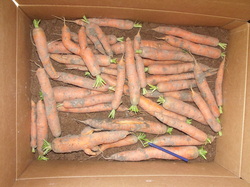 This year most of Alberta has had a longer period without frost, and many areas have been lucky enough not to be hit yet, and it’s nearly October! Well if you are looking for ways to dodge the first few days of frost when they do happen, here are some options-both obvious and maybe not so obvious (and if your garden has been hit, start planning for next year). Frost generally occurs for two reasons: 1. Either there has not been enough heat accumulated throughout the day or 2. The heat that was accumulated has been allowed to escape to the point the temperature drops to freezing. Drop Cloth—for a simple “Band-Aid” solution, the old standby, quick-fix is the drop cloth. Use any old bed sheets or blankets and make sure not to break any fragile branches. Placing stakes into the ground every few feet is a good way to keep the branches safe. This can work for fruit trees as well, depending on size. Remember to remove each morning after frost danger has passed. Mulch –Although not really a viable solution for protecting tomatoes or other large annuals, mulch is an option that prevents the escape of heat into the atmosphere and would generally be used on plants less than six inches in height, or to protect roots of perennials over the winter. In addition to preventing water loss, it acts as an insulator. Good mulches for autumn include leaves and other organic debris. Water—Water acts as a temperature pacifier and keeps the ambient temperature from fluctuating as much as it otherwise would in drier conditions. The key here is to ensure the temperatures at the time of spraying are not already close to freezing. Watering near or just before the warmest part of the day is best as long as most of the water does not evaporate before nightfall. Another idea is to use water that sits in a rain harvesting system that has been sitting in sun for several hours. Just be sure not to shock the plants by any sudden temperature changes when first spraying.  The following may be too late to start implementing this year, but these are some you may contemplate for future seasons…
Heat sinks—A heat sink is any physical body that collects the sun’s radiation throughout the day and releases this captured heat after dark. Such examples include large rock or brick masses, water tanks, and anything especially dark in colour. Remember that the effect can vary greatly depending on the type of material used as well as its colour. Experiment and do your own research. Elevation—the areas especially prone to frost depend on elevation. So which is it, the higher areas or the lower areas? Well, both actually. Cold air tends to sink to the ground and ‘pool’ at the lowest spots as if it were water. At the same time, areas on the peaks of hills are more exposed and the soonest to fall victim to cold air masses. So the best answer is whenever possible, plant the most tender plants in the mid-elevations. They will be protected by the higher surfaces and most of the coldest air will sink to the lowest spots first. Planting under a frost barrier—Finally, planting larger and less frost-sensitive plants and trees in such a way as they shield the lower plants from heat loss is an excellent way to keep the ground temperature from dropping to freezing. The general rule that works best here is, the less of the night sky that is visible, the less heat will be lost. Conifers or any tree with broad, over-hanging branches are good options. Just ensure that they will not shade out the plants, so planting these taller trees on the north side of fragile lower plants is a good solution. Finally, many root vegetables such as carrots, parsnips, turnips and so on can be kept in the ground for several frosts. Some say it actually enhances flavour. For extra protection, simply cover in a six-inch layer of mulch and in Calgary's climate, this should suffice for well into October. Remember that it only takes a couple of hours for frost to cause damage. iin most cases the best we can expect is about a few degrees maximum that we can affect the temperature. This is done by collecting the sun’s energy during the day and making sure it stays with the most sensitive plants at night. Sometimes though this can make a huge difference when the autumn sees just a hand-full of days that hover around freezing, followed by a couple of weeks of warmer nighttime temperatures. So take advantage of the longer growing season with these few simple measures against frost.  A must watch! For anyone who has ever been to or lived in New York City, this video will really hit home. Even if you haven’t, Sanderson’s visuals of Manhattan’s once natural ecologies are awe-inspiring—and he gives a surprisingly positive vision of what New York (or any urban area) could look like in the future. He even talks about how the multiple connections in the ecosystem are responsible for its resilience. My Commentary: It is so intriguing to imagine what the physical history might have been in a place you know so well in its current state. We often take for granted the complexities of life that existed before colonial settlements moved in--before we began to build so many human-oriented structures. Many times we just assume that, yes, there were trees, maybe some meadows, ponds--not much happening. This video reminded me otherwise. I am highly impressed with Sanderson’s interpretation in that he pays respect to the complex web of life that must have existed in order to support the 51 unique habitats on that land over 400 years ago. What is missing from his commentary, however, is the fact that Manhattan, like most urban areas, is highly dependent on input from the outside world. In fact, in its current state, it is nearly completely dependent on exterior sources for its food, building materials, and other life essentials for the survivability and daily living requirements of its inhabitants. That said, enjoy the talk and think about the tremendous impact we humans have on our living systems and how we might better adapt our living arrangements to harmonize with our natural environments. Enjoy the talk!  Valentine’s Day Special - Resilient Relationships In permaculture we often contemplate what it takes to create a more resilient system when designing a sustainable ecology. The more bonds or connections we can create between various elements, the stronger the web or network connecting the system as a whole. The same principles can be applied in so many other facets of life, and human relationships are no different. As Valentine’s Day approaches, I wanted to touch on this topic briefly, as human partnerships—romantic or otherwise—can be among the most important factors to our survival. The relationships we share with our loved ones can be considered living systems in the same way as a thoughtfully designed garden or forest ecology. In either arrangement, the more connections we create, the stronger the whole system becomes. So how are these connections formed? Anyone somewhat familiar with permaculture will recall the ‘needs and yields’ analysis we often perform when considering the arrangement of different elements in a design. For example, planting pole beans next to corn creates multiple connections which aid the growth of both plants. The corn needs nitrogen—a yield fulfilled by the bean. The bean needs a structure on which to climb, yielded by the corn plant, and so on. So, let us consider how this might relate to human pairings. Many of us have likely pondered the needs of our partners on a somewhat regular basis (hopefully). Consider how your yields mesh with those needs, and if they don’t quite mesh perfectly, that is what we can build upon (and let’s dispense with the essentials of acquiring shelter, food or sustenance, and clothing and move up the needs hierarchy to more social, emotional and personal needs for this discussion). Some needs we might consider here are the need for recognition, understanding, the need to be appreciated, to be heard, or supported in our endeavours, the need to feel that we matter—the list is endless. The good news is, anyone can fulfill these needs at any time—it might just take a little careful thought and work.  For example, maybe you can recollect a conversation you had with your partner about a comforting childhood memory, let’s say, where a relative cooked a special meal for them or took them to a special restaurant where they were served that meal, and it has been one of their favourites ever since. Now either you are an experienced cook or you are not. This is where we start to build on our yields. Even if you have been known to burn water on the stove, you can learn to cook. Take a class, or if that is not possible, the internet and library are great places to start. Learn everything there is to know about that meal and surprise your partner with a delicious and romantic display of prawns korma, daal, and gulab jamun to finish or something like tourtière, mixed greens, and gratin dauphinois—or maybe simply home-made cinnamon buns (anything is great by candlelight)! The point is, in doing something involving careful thought and consideration for who the person is, we have fulfilled at least 2 or 3 of the needs mentioned above and maybe more.
Another area to consider is your partner’s favourite music. Let’s say she loves Latin music. If you can get away once in a while (in secret so as not to ruin the surprise factor) take a crack at some Salsa or Merengue lessons (or for the more adventurous there is always Bachata). One day when you have reached the point of being comfortable with the dance, on a quiet night at home turn the lights low and if she doesn’t know the dance well, her own personal lessons are about to begin! On the other hand, maybe you can’t quite get away with the element of surprise. Why not take lessons together? This is a wonderful way to make sure you make time for each other. If dancing or cooking is not your thing, consider learning various massage techniques. Maybe your partner has constant neck or back tension. Everyone needs a massage! All this information is readily accessible at very minimal cost. Other ideas are easy enough to come by. Educate yourself about your partner’s culture (if it is different from your own). Learn more about their life. Have deeper conversations. Find ways of supporting them in the goals they’ve always dreamed of accomplishing—that’s the recognition, and the part about being heard, respected, and understood. Yes, I have made this sound way easier than it is. Relationships are complicated ‘ecologies’ whose resilience depends on far more than mere needs and yields. This is just a starting point. I am only planting a few seeds here in the hopes they will germinate into something far more beautiful and life-giving. Nowhere have I taken into account those relationships which may be beyond the point where this article could benefit, nor have I acknowledged the ones who already think along the lines of “needs and yields” and simply may not realize it yet—good for you if you have! Of course, you’ll notice I have not even touched on the topic of sex, but that would require another long article altogether (I will just say two words: ‘Kama Sutra’). The point is, just as an ecological garden cannot simply be a spattering of plants co-existing in the same space, a healthy relationship must be more than two people simply co-existing as such. Every relationship is different, but our needs and yields as human beings are more similar than we might at first recognize. Nevertheless, reflecting on your partner’s specific requirements and then planning how to answer these desires with a course of action that is both thoughtful and loving, is a giant step toward relationship resiliency. Thanks everyone for your patience over the last month or so. Things have been very busy which is great, but my online correspondence has been put on the back-burner for the time being. Regardless, I am back to provide a little briefing on the past month or so on what Prairie Sage has been up to... 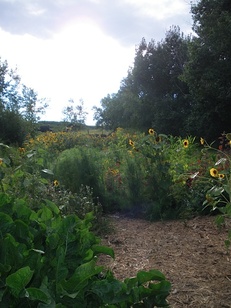 The month of September started off with a bang as we conducted the first permaculture tour of the Calgary area (I will provide a more detailed write-up on the day’s events with photos very soon). Many thanks again to all who helped to make the day such a success. Due to popular demand, it appears we will be providing many more similar tours beginning next spring. Looking forward to it! Immediately following the tour, I had been contracted to design a self-watering landscape and construct it before the third weekend of September. Thanks to the extended summer weather, the landscape was completed with success. 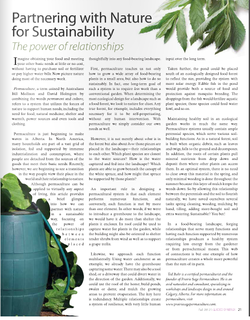 Also near the beginning of the month, the Alberta-wide magazine Guided Synergy published a feature article I had written on the subject of Permaculture and relationships. My hopes were to introduce readers to this still relatively little-known discipline. The article can be found on page 21 by clicking HERE Now the not so good story…Near the middle of September, Prairie Sage’s Twitter account had been compromised , sending spams to many of my followers. After some virus scanning and quarantining, and a couple of password changes, things started rolling along just fine once again. Whew! Thanks to my Twitter followers for sticking with me and your understanding during the fiasco! 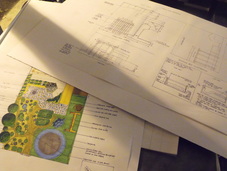 Finally, the last portion of the month saw another client contract Prairie Sage with an “emergency” backyard design, in the hopes that deck construction can begin and be completed before the ground freezes. We have succeeded in completing the initial design-rendering phase, and the deck construction is on schedule. The project as a whole, however, looks like it will continue well into next summer.
The next few months should see me back in online form more frequently. Some workshops are in order (I know many of you have been asking) and I will provide the info as soon as we can set dates and venues. While I may be still doing some more designs, I will also be putting together the tours and other events for an exciting year to come! 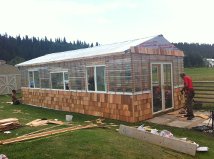 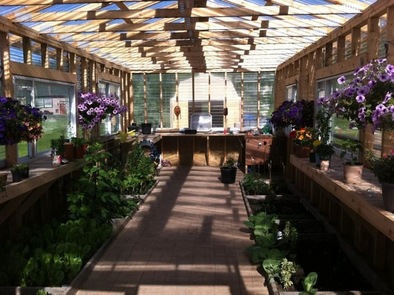 Another Greenhouse Story Our July issue brought to light a little about the solar greenhouses popping up around Calgary. In response to that article, I received a letter from one reader who along with her partner have constructed a rather large one of their own just southwest of the city. Being that Andrea and Carlos are nearer the mountains than us city dwellers, their growing season is that much shorter, and so a greenhouse was the best option for them. The 32 x 12-foot structure (sort of a modified garage or shed) was constructed far more cheaply than any store-bought greenhouse packages, using salvaged and second-hand materials. It also makes use of other pre-existing resources for plant irrigation. According to Andrea, “The structure has 6 windows for ventilation that we sourced on Kijiji from someone who was replacing windows in their home. The entrance door is also a salvaged double glass door from a renovation job. We installed a solar panel provide us with the power to work a fan inside as well as to power a pump for watering. The origin of that water is from our home's sump pump which is quite active. That ground water has served most of our landscape needs and all of our greenhouse watering (an assortment of cisterns that collect rain water take care of the rest).” Additionally, brick pavers have been added to a walkway inside the building in order to capture and hold heat. The past couple of growing seasons have provided a plentiful harvest with more modifications to the greenhouse yet to come. These include insulation and rain water catchment which are likely to further enhance the growing conditions in this indoor food garden. Thank you to Andrea and Carlos for sharing, and may this, and all your future growing seasons be bountiful! 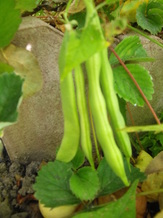 Nitrogen Fixers—Amazing Plants
If you have been gardening for a little while, you are likely aware that nitrogen is a key component for plant growth. If you are attempting to garden without the use of fertilizers (synthetic or otherwise), you’re probably already aware of the importance of including a few nitrogen-“fixing” plants in your landscape. Some examples of these plants include caragana, sea buckthorn, clover, all types of beans, peas, peanuts, soybean, groundnut, and other leguminous plants (as well as a few non-leguminous plants). A nitrogen fixer is a special type of plant which has tiny nodules on its roots which host a kind of bacteria whose key role is to convert nitrogen that the plant draws in from the atmosphere into a useable form for the plant. This nitrogen is also made available to surrounding plants either through the soil or when the N-fixer has decayed. A second intriguing thing about these plants is how they relate to humans. Most non-nitrogen-fixing plants provide our diet with sugars or carbohydrates of some type. Chemically speaking, we are talking about a combination of carbon, hydrogen and oxygen. When a fourth element of nitrogen is added, a protein (or amino acid) is created, making any food harvested from Nitrogen fixers a good source of protein. It would be difficult to obtain a healthy diet (especially if you are vegan or vegetarian) without these plants. Remember to always include these plants in any landscape, especially where you would like mother nature to do your fertilizing for you! ______________________________________________________________________________________ Reminder! Don't Forget Permaculture Tour 2012 - Click Here for Tickets!  This Issue:
Plant Polycultures Passive Solar Greenhouses Permaculture Tour 2012 is Here Plant Polycultures-A Garden with Many Functions When designing a food-bearing landscape, one of the first things to decide is what plants will go where in the growing space. Most of us have heard of companion planting, square-foot gardening, perennial food forests, and inter-planting. Creating a polyculture combines many of these strategies and more. In this issue we will look at the planning stages of a polyculture and the elements necessary in creating a resilient and productive one. In books and all over the internet, we can find loads of advice on which plants grow well together and which ones do not. Some of these combinations work fairly well, while others have yet to convince me. Providing mishmashes of different vegetables is not our purpose here. Since climates, pests, soil types, and our own tastes vary, we want to discover what works well in our own gardens, and we can do so by choosing plants not by species, but via the function they perform in the landscape. Keep in mind that perennials are very useful in a polyculture. We can plant only annuals, but this is asking more much more work in the long run. Here is a list of functions (not necessarily in order of importance) that we want to include in any polyculture. A quick web search under any of these topics will provide numerous plant types suitable for any garden. If we have balanced proportions of plants in each of these categories, we are off to a good start: A. Nutrient Accumulators The thick and/or long roots of these species plunge far into the earth to extract minerals and other ingredients necessary for all plants to thrive. Usually after several of these species have matured, they will begin a natural decline in numbers once their job is complete. Examples of these might include: plantain, alfalfa, dandelion, chicory, and mustard species. B. Nitrogen Fixers In any guild, it is crucial to have plants that fix nitrogen in the soil. These plants have a specialized ability to extract nitrogen from the atmosphere and place it into the soil. Nitrogen is a necessary element in all plant development and speeds the growth of all plants. Nitrogen fixers include plants such as clover, peas, potatoes, Siberian pea shrub (caragana arborescens), lupines, and any leguminous or bean type plant. C. Mulch Plants We use these plants for building soil, preventing erosion and evaporation, and protecting and shading the roots of others. In this category we often might include a process called “chop and drop”, which involves cutting the plant down at the soil surface and leaving the greens on the soil to eventually decay. The roots either come back as another plant, or decay as well becoming part of the humus layer of the soil. The “chopped” parts of the plants also become a thick and fluffy layer on top of the soil. Some examples for mulch plants are rhubarb, nasturtiums, Jerusalem artichoke, mustard, oats, and barley, and virtually any soft-leaf plant that decomposes quickly. D.Insectary Plants These are any plants that will attract beneficial insects to your site (insects that will either pollenate to produce fruit or will consume/deter pests). Insect attractors include dill, coriander, thyme, yarrow, fennel, and believe it or not, dandelion. There are other smaller categories, such as those which provide animal habitat and those which act as soil fumigants, but beginning with the four listed above is a good start. Additionally, it is wise to use any plant that is able to perform more than one of the above jobs. This is what we call ‘stacking functions’. Examples of this would be using clover as both a mulch plant as well as a nitrogen fixer, or growing comfrey as a nutrient accumulator and to fix nitrogen or even using rhubarb as a mulch plant and of course a human food. Finally, we should keep in mind the actual space each plant takes up in the landscape—both above ground and below. This is why we try to arrange plants in a polycultured landscape, creating a ‘mosaic’ in which generally we keep similar plants away from each other as much as possible. Doing so will minimize competition for sunlight and soil, as well as confuse pests (or at least keep them confined to one or two plants.) As in any form of permaculture, the more functions we can cover off each time, the more resilient the system and the less energy it will consume in the long run. Passive Solar Greenhouses Beginning to Appear in Calgary Many people protest the short growing season in Southern Alberta. With some techniques such as raised beds, cloches, and mulching, we can usually expand the less than 110 frost-free days, but some people are taking things a little further. A passive solar greenhouse can expand the growing season by several months without the use of external power. Unlike traditional greenhouses, the idea here is to trap solar radiation within the structure to create the appropriate growing conditions for most plants. So how is this accomplished? Think of what happens when we leave our vehicles parked for a while on a sunny day. Even on a day reaching a mere 15 C, the interior can be quite hot. This is because the glass allows the solar radiation to enter, while the rest of the car absorbs this heat and insulates against heat loss. Most greenhouses lose heat through any side of the structure that faces away from the sun. What we are trying to accomplish with the passive solar type is to minimize heat loss. To do so, the north and sometimes east and west sides are built with walls containing good insulating materials—sometimes with an R-value greater than most homes. On the opposite end of the scale, adequate ventilation is a must especially for the warmer days of summer. There are many other modifications that can be made, such as the angle of the glass and materials used as well as covering the whole structure with insulated blankets in the coldest days of winter. Nevertheless, experimentation with capturing and holding heat and moderating temperature so that plants might one day make it through our severe winters, continues. The following are links to a couple that have popped up in Calgary. (I also have a friend (no link yet) who has just installed a solar heated shower in hers). Verge Permaculture, Just completed the addition of a rocket stove to this one… http://www.vergepermaculture.ca/blog/2011/01/09/how-we-designed-our-solar-greenhouse This one by Joshua Baker of Radicle Routes was constructed using reclaimed materials… http://radicleroutes.com/blog/the-solar-greenhouse/ Calgary Permaculture Tour 2012 is Here For those not already in the know, on Sept 1, 2012 Prairie Sage will be conducting a one day tour of Calgary's most prominent and exciting sustainable and regenerative living sites. Details of the day are as follows...This excursion will be both educational and fun! Leave your vehicles or bicycles at our meeting place (The AREA 12:30 pm) and be escorted around Calgary for a tour of such notable places as Verge Permaculture, Patterson Springs Farm, The AREA and more. The tour will conclude in the evening with a locally brewed wine/mead and dinner at the AREA in Inglewood. More information can be found HERE!  This issue: Building Soil Naturally Wildwood Garden Starting to Resemble Design Kids Workshop June 9, 2012 The Basics Of Building Soil Naturally Every spring I have people ask me where the cheapest soil in town can be found. Of course I let them know the company that sells it at the lowest cost (that I am aware of). However, what I should be telling people is that the cheapest soil is actually in your own backyard--or at least it can be made there if you’re willing to be patient. In permaculture, just as in nature, good soil is made by two directional energies: one flows from deep beneath the soil toward the surface, and the other flows from plant branches downward to land on that surface. In other words, all the natural mulch such as leaf litter, flower petals, and other plants materials that land on the ground will decay and turn into a fluffy layer of humus. At the same time, certain plant roots plunge deep into the earth to mine minerals and bring them up to the surface. If we allow those plants to eventually decay, the minerals will be left there for other plants to access them. A technique to speed this up is called “chop and drop”, where we allow these thick or long-rooted plants to grow to a certain size and then chop them down and leave the greens on the soil. The roots decay into “fingers” of humus and the greens also decay on top of the soil. The idea is, you throw nothing away; everything is returned to the soil. Helping the decay process are soil microbes, which digest organic matter and return it to the soil in hummus form. If your garden is used to constant input of pesticides and chemical fertilizers, there will not be as many microbes available for this process. This is where patience is vital. The soil bacteria and macrofauna will multiply if left to do so, making the whole soil creation process a lot more efficient in subsequent months and years. The problem is that the type of gardening I’ve talked about so far mainly applies to perennial beds. As most people like to do vegetables, which are usually annuals, nutrients are constantly being removed without being replaced. So a bed that is 100 percent annuals would require a whole lot of compost or fertilizer of some sort to replenish those nutrients. This is why we always plant polycultures—the more plants and plant types the better. In nature you will never find an ecology made up of only annuals. In addition, perennial gardening does not mean that we need to stick to fruits. There are many varieties of vegetables which come back year after year. Examples of these are: Asparagus (zone 3), globe artichoke (zone 3), fiddleheads (zone 3), Chinese mountain yam (Zone 5), wild leeks (zone 3-4), garlic chives (zone 3), lovage (zone 3), Turkish rocket (zone 5), Groundnut (Apios Americana) (zone 3), Good King Henry(zone 3) and Rhubarb (zone 1), just to name a few. There are many more to add to this list, and many more to experiment with. If you still want to interplant some annual veggies to the landscape, then go for it. Some of us find it a little difficult to live without our crunchy carrots, etc. Just remember that when you pull the entire plant from the ground, the nutrients must be replaced in some way. If those carrots are surrounded by perennials raining organic matter all around them, then it will be less difficult to replenish soil. 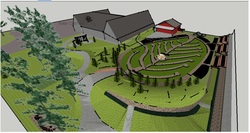 Wildwood Garden Starting to Resemble Design Members of the community of Wildwood have been hard at work since about mid-April on their community garden which uses permaculture strategies and design throughout. There are about 500 square feet of terraced wicking bed space so far which will drain into the swales of the lower leaf-shaped garden. There is much more work to be completed, but it will be done in stages. Some wicking beds are ready for planting, and the remainder should be near completion this weekend. Anyone wishing to volunteer and pick up a few pointers on permaculture is encouraged to drop by especially on weekends 4411 Spruce Drive Southwest, Calgary, AB 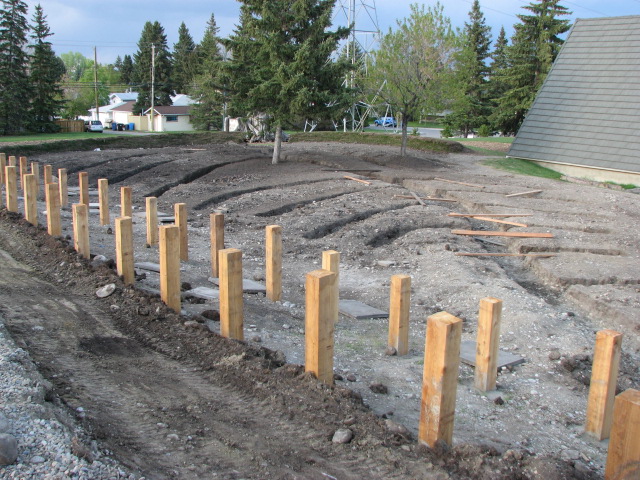 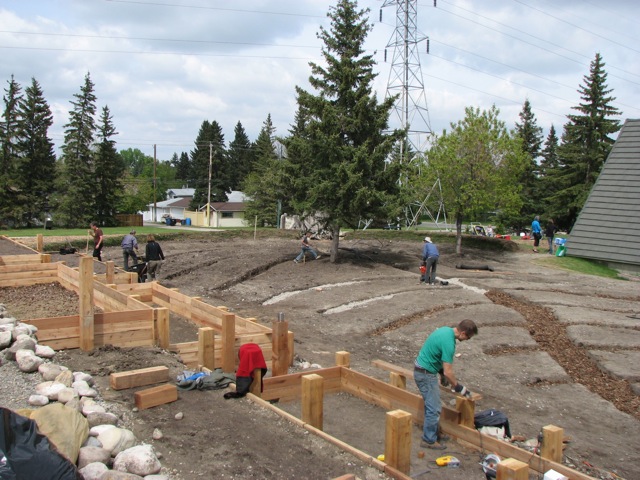 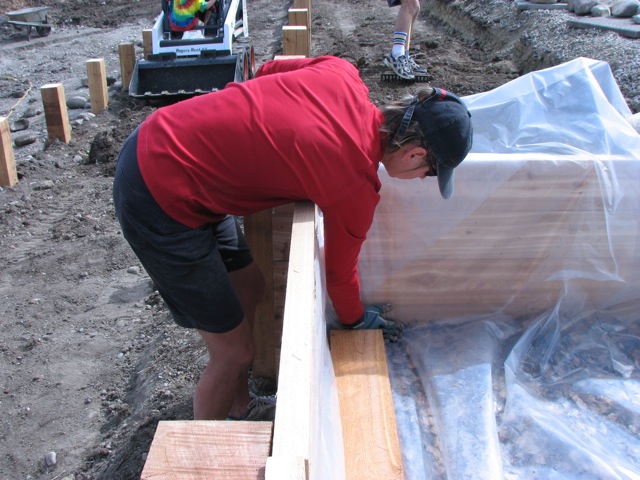 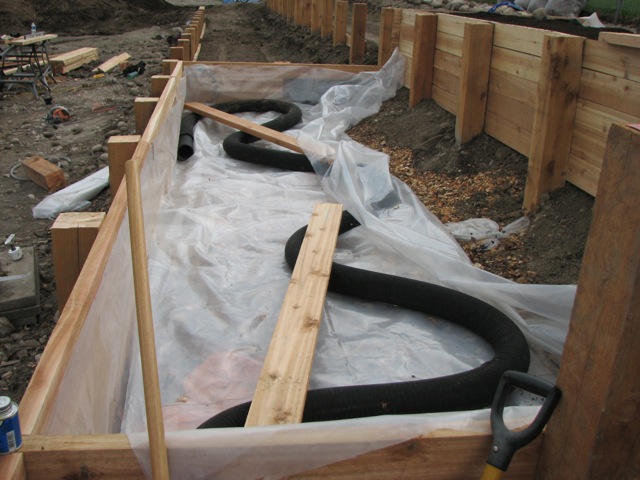 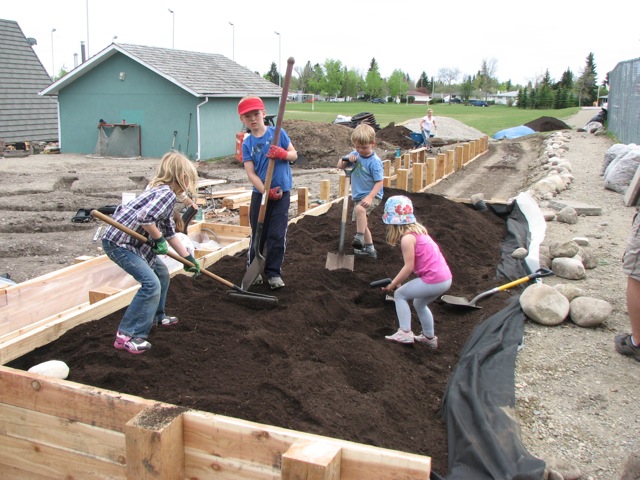 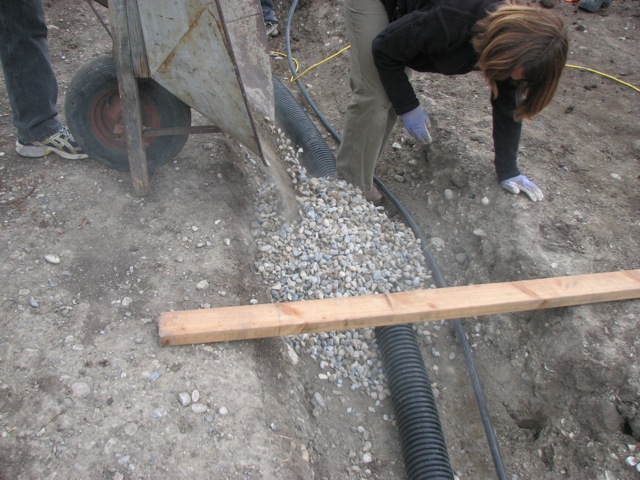  Gardening Workshop for Kids!
On the morning of Saturday, June 9 I will be doing a free children's workshop with "Kids Grow" at the West Hillhurst Community Garden where children will learn a little about plant guilds and be encouraged to participate in helping plant a small plot in the area. For more information, please contact Tamara with Kids Grow email: kidsgrowgardening@gmail.com or Ted Bahr with Prairie Sage Permaculture. Thanks and Happy Growing! |
Author:Ted Bahr is the founder of Prairie Sage Permaculture. MORE Archives
April 2023
Categories
All
|
 RSS Feed
